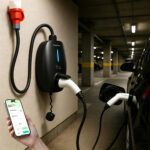
Electric vehicles are selling faster than ever. Yet many drivers still hesitate. Why? Misinformation plays a big role. Rumors about charging spread online and through word of mouth. Some of these myths are harmless. Others stop people from going electric altogether. At Changzhou Fisher Electronic Technology Co., Ltd., we hear these misconceptions every day. In this post, we bust the most common EV charging myths. By the end, you will have the facts you need to charge with confidence.
Myth 1: Frequent Fast Charging Destroys EV Batteries
This myth causes a lot of anxiety. Many drivers believe that using DC fast chargers will quickly ruin their battery. The truth is more nuanced.
Modern EV batteries are remarkably durable. They come with sophisticated thermal management systems. These systems keep battery temperatures within a safe range during fast charging. Most automakers also reserve a small buffer at the top and bottom of the battery. That buffer protects against overcharging and deep discharge.
Studies show that daily fast charging has a small impact on long-term battery health. For example, a Nissan Leaf used as a taxi may see slightly faster degradation. However, for normal drivers who fast charge occasionally, the difference is negligible. A typical EV battery will last 15 to 20 years regardless of charging habits.
What really hurts batteries? Extreme heat. Sitting at 100% state of charge for weeks. Frequent deep discharges below 10%. Notice that fast charging is not even on that list. So feel free to use DC fast chargers on road trips. For daily driving, Level 2 home charging is still cheaper and more convenient. But occasional fast charging will not kill your battery.
Myth 2: You Should Not Charge Your EV to 100% Every Night
This myth contains a grain of truth. But it is often exaggerated. Let us clarify.
Lithium-ion batteries prefer to operate between 20% and 80% state of charge. Staying at 100% for long periods does increase stress on the battery. This is especially true in hot weather. Many EV owners have heard this advice. They then worry that charging to 100% overnight will cause damage.
Here is the reality. Charging to 100% right before a long trip is perfectly fine. The problem arises when you charge to 100% and then let the car sit for days or weeks. For nightly charging, most automakers recommend setting a limit of 80% or 90% for everyday use. That small adjustment significantly extends battery life.
However, do not lose sleep over an occasional full charge. Modern battery management systems are smart. They slow down charging as the battery nears 100%. They also stop charging entirely when full. If you need 100% range for your daily commute, charge to 100%. The battery will still outlast your ownership of the car. The key is avoiding prolonged periods at 100% in hot garages.
Many EVs now offer scheduled charging and charge limits through their apps. Use these features. Set a daily limit of 80% for normal driving. Raise it to 100% the night before a long trip. That simple habit gives you the best of both worlds.
Myth 3: All EV Chargers Are the Same
Walk into any hardware store. You will see EV chargers ranging from 150to150to1,500. Some are compact and basic. Others are large and packed with features. Are they all the same inside? Absolutely not.
Cheap chargers often cut corners. They use thinner copper wires. Their plastic housings may lack UV stabilizers. They skip important safety certifications. Some do not include ground fault protection or over-temperature sensors. These chargers might work for a few months. Then they fail. Or worse, they become a fire hazard.
Quality chargers cost more for good reasons. They use pure copper cabling with proper gauge. Their enclosures meet IP65 or IP66 ratings for dust and water resistance. They include UL, CE, or CB certification. Smart chargers add OCPP compliance, app control, and load management. These features protect your car and your home.
Additionally, consider the cable. Low-quality cables become stiff in cold weather. They crack after repeated bending. Premium cables remain flexible and durable for years. The plug itself matters too. Quality plugs have sturdy latches and smooth pin surfaces. Cheap plugs may stick or fail to latch properly.
So when shopping for a charger, look beyond the price tag. Check certifications. Read reviews. Choose a reputable brand like Changzhou Fisher Electronic Technology Co., Ltd. Your car and your safety are worth the investment.
Myth 4: EV Charging Is Too Expensive Compared to Gasoline
This myth persists despite mounting evidence to the contrary. Let us do the math honestly.
The average American drives about 13,500 miles per year. A typical EV consumes 0.35 kWh per mile. That equals 4,725 kWh annually. At the average US residential electricity rate of 0.16perkWh,theyearlycostis0.16perkWh,theyearlycostis756. The same mileage in a 25 MPG gasoline car at 3.50pergalloncosts3.50pergalloncosts1,890. That is more than double.
Even using public Level 2 chargers at 0.25perkWh,theannualcostrisesto0.25perkWh,theannualcostrisesto1,181. Still cheaper than gasoline. DC fast charging at 0.45perkWhbringsthecostto0.45perkWhbringsthecostto2,126. That is slightly above gasoline for this example. But remember, most charging happens at home, not at fast chargers.
Many utilities offer time-of-use rates. Charging overnight can cost as little as 0.08perkWh.Thatreducestheannualcostto0.08perkWh.Thatreducestheannualcostto378. Some employers offer free workplace charging. That lowers the cost further. Plus, EVs require less maintenance.
Over five years, an EV owner typically saves 5,000to5,000to10,000 compared to a gasoline car owner. Charging is not expensive. It is one of the biggest financial benefits of going electric.
Myth 5: Installing a Home Charger Requires an Expensive Electrical Upgrade
This myth scares many potential EV buyers. They imagine tearing up walls and paying thousands of dollars. The reality is often much simpler.
Many homes already have a 240V outlet in the garage. This could be for a clothes dryer or an old welder. A NEMA 14-50 or 6-50 outlet works perfectly for Level 2 charging. In that case, installation costs zero. Just buy a plug-in charger and connect it.
What if you do not have a 240V outlet? An electrician can install one near your electrical panel. For a simple installation with the panel in or next to the garage, expect 300to300to800. That includes the outlet, breaker, and labor. Hardwiring a charger without an outlet is similar in cost.
Challenges arise only when the electrical panel is far from the garage. Long wire runs increase material costs. Older homes with 100-amp panels may need a panel upgrade. That can cost 1,500to1,500to3,000. However, this situation is less common than people think. Many 100-amp panels have enough spare capacity for a 40-amp charger. An electrician can perform a load calculation to confirm.
Even if you need a panel upgrade, consider the long-term value. You are modernizing your home’s electrical system. You also qualify for federal and local incentives. The US 30C tax credit covers 30% of installation costs up to $1,000. Many states add their own rebates. Net cost is often much lower than the initial quote.
So before assuming the worst, get a professional assessment. Chances are, your home is already charger-ready.
Myth 6: Charging Overnight Will Overload My Home’s Electrical System
Homeowners worry about tripped breakers and fires. They imagine their entire house going dark because the EV charger started at midnight. This fear is understandable but largely unfounded.
A typical Level 2 charger draws 32 to 40 amps. A modern home with a 200-amp service can easily handle that. You have plenty of capacity left for lights, appliances, and air conditioning. Problems occur only if your home has a smaller 100-amp service and runs many high-power devices simultaneously.
Even then, there are solutions. Smart chargers offer load balancing. Some work with a home energy monitor. When the monitor detects high total usage, the charger reduces its current automatically. After other appliances turn off, the charger ramps back up. This prevents overloads without any effort from you.
Another solution is to schedule charging for late night. Between midnight and 6 AM, most homes use minimal electricity. Your oven, dryer, and AC are off. The family is asleep. The charger can run at full power without affecting anything else. This is why time-of-use rates are so popular. They encourage overnight charging when the grid has spare capacity.
Finally, certified chargers include over-current protection. The circuit breaker will trip before any wiring overheats. That is its job. A tripped breaker is annoying but safe. It tells you that your electrical system needs adjustment. Call an electrician to evaluate and upgrade as needed.
Do not let fear of overloading stop you from enjoying home charging. Most homes handle it just fine.
Myth 7: Used EVs Are Not Worth It Because the Battery Will Fail Soon
The used EV market is growing rapidly. Yet many buyers still believe that old EV batteries are ticking time bombs. The data says otherwise.
EV batteries are proving to be exceptionally reliable. Data from Tesla shows that their batteries lose only about 12% of capacity after 200,000 miles. That means a used EV with 100,000 miles still has 90% to 94% of its original range. For a 250-mile range car, that is still 225 to 235 miles. Plenty for daily driving.
Many manufacturers offer long warranties. Federal law in the US requires an 8-year, 100,000-mile warranty on EV batteries. Some brands like Hyundai and Kia offer lifetime battery warranties for original owners. Even on the used market, a car within the warranty period gives you protection.
Furthermore, battery replacement costs are falling. In 2015, a replacement battery could cost $10,000 or more. Today, prices have dropped by 80% to 90%. Independent shops can refurbish batteries by replacing only failed modules. As more EVs age, the refurbishment market will grow.
When buying a used EV, get a battery health report. Many dealers provide one. You can also use apps like Recurrent that analyze battery data. Avoid cars that have been consistently fast-charged to 100% in hot climates. Otherwise, a used EV is an excellent value. You avoid the steep depreciation of a new car. And the battery will likely outlast your ownership.
Myth 8: Public Charging Stations Are Always Broken or Unreliable
Early public charging networks had growing pains. Broken displays. Payment failures. Inconsistent connectors. Those problems created a lasting bad reputation. But the industry has improved dramatically.
Today, major networks like Electrify America, EVgo, and Ionity invest heavily in uptime. They monitor stations remotely. Technicians respond quickly to faults. Newer stations use more reliable hardware and simpler payment systems. Many now accept credit card tap-to-pay, removing the need for apps or memberships.
According to recent reliability studies, major network uptime averages 95% to 98%. Yes, some stations still fail. But the vast majority work when you arrive. Apps like PlugShare provide real-time status reports from other drivers. You can check before you drive to a station.
Additionally, automakers are integrating charger status into their navigation systems. Your car can route you only to available, working chargers. Some systems even precondition the battery for optimal charging speed as you approach.
The charging experience is not perfect yet. But it is light-years ahead of where it was five years ago. The myth of perpetually broken chargers is outdated. Give public charging another try. You will likely be surprised.
Myth 9: You Need a Dedicated Garage to Charge an EV
Not everyone has a garage. Some people park on the street. Others use carports or shared lots. Does that mean they cannot own an EV? Not at all.
Weatherproof EV chargers are designed for outdoor installation. Look for IP65 or IP66 rated units. They withstand rain, snow, dust, and temperature extremes. Many apartment complexes now install chargers in open parking lots. Homeowners mount chargers on exterior walls or freestanding posts.
If you park on the street, charging requires more planning. Some cities install curbside chargers on lamp posts. Others allow running a protected cable across the sidewalk in a cable cover. Check local regulations. Another option is charging at work or at public stations near your home. Many people successfully own EVs without dedicated off-street parking.
For apartment dwellers, talk to your landlord. Many property owners are installing chargers to attract tenants. You can also use portable Level 1 chargers with standard outdoor outlets. Level 1 is slow but may be enough for short daily commutes.
So do not let the lack of a garage stop you. Solutions exist. The EV lifestyle is more flexible than many realize.
Myth 10: Electric Vehicles Will Overwhelm the Power Grid
Critics often claim that mass EV adoption will cause blackouts. They imagine millions of cars charging at once and collapsing the grid. This scenario is pure fantasy.
First, most charging happens overnight. Electricity demand at night is very low. Utilities have massive spare capacity during those hours. In fact, adding EV load improves grid efficiency by flattening the demand curve. Utilities welcome overnight charging.
Second, smart charging and V2G technologies actively manage demand. Chargers can communicate with the grid. They can delay or reduce charging during peak events. Drivers set their desired departure time. The grid charges the car at the cheapest, most convenient moment. This actually helps grid stability.
Third, grid planners are preparing. The International Energy Agency projects that by 2030, EVs will add less than 1% to global peak electricity demand. Upgrades happen gradually. Local transformers may need replacement in some areas. But wholesale grid collapse is not a serious concern.
Finally, renewable energy is growing rapidly. Solar and wind are now the cheapest sources of electricity. More supply comes online every year. EVs and renewables are a perfect match. They enable each other.
The grid can handle EVs. Do not let this myth delay your electric future.
Fisher: Your Partner in Truth and Technology
At Changzhou Fisher Electronic Technology Co., Ltd., we believe in facts. We design our chargers to be safe, reliable, and affordable. No gimmicks. No misleading claims.
Every Fisher charger includes essential safety certifications. We use premium materials and intelligent electronics. Our customer team answers your questions honestly. Whether you are a first-time EV owner or a fleet manager, we give you the information you need.
Visit our website to explore our product range. Read our technical resources. Contact us for personalized advice. The truth about EV charging is exciting. Let us help you experience it.