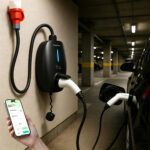
Introduction: Solve the Global EV Charging Gap in 2026
Global electric vehicle ownership keeps climbing at a fast pace in 2026.More drivers face obvious pain points from fixed charging infrastructure.Many areas lack enough permanent public charging piles for daily use.Installation delays and high construction costs slow down station deployment.
Meanwhile, portable EV charging stations gain explosive market attention.Market data shows its quarter‑over‑quarter demand grows by 19.26 percent.It no longer acts only as a simple emergency backup tool.Instead, it becomes a core supplement for the whole EV energy network.
This article explores its core strengths, real‑world scenarios and market outlook.It also explains why this solution wins favor among B2B buyers and end users.
Core Strength 1: True Portability Enables Fast Deployment Anywhere
Traditional fixed charging stations need complex site preparation work.They require wiring, foundation building and official permit approvals.
In contrast, portable EV charging stations skip most of these steps.
First of all, compact unit design supports easy transport and relocation.Users can move the whole device between different working sites freely.Furthermore, most models support plug‑and‑play operation modes.Teams finish on‑site setup within minutes without heavy construction.Thus, it cuts huge labor costs and long waiting periods for projects.
Besides, many versions carry built‑in energy storage battery modules.They work well even when stable grid power is not available nearby.For example, you can place them in remote parking lots or outdoor zones.What is more, lightweight designs fit vehicle trunk storage for road trips.Rental housing users also benefit greatly from this movable hardware.They avoid permanent wall modification when they change residences.
Above all, portability creates new possibilities for temporary charging needs.
Core Strength 2: Wide Compatibility Meets Diverse Global Demands
Compatibility stands as one key factor for real‑world product performance.To start with, these stations cover mainstream global EV connector standards.They support Type 2, J1772, CCS and other common interface formats.They fit passenger EVs, plug‑in hybrids and light commercial vehicles.In addition, power output ranges cover both AC and DC fast‑charging options.Users can pick models from 7 kW up to high‑power 30 kW DC units.Adjustable current settings adapt to unstable local grid conditions.This function prevents circuit overload in areas with weak power supply.
Moreover, leading products follow updated international certification rules.They pass CE, UL2202 and ISO 15118 related testing requirements.They also align with OCPP 2.1 open protocol for cloud system connectionOpen Charg….Therefore, these devices suit markets across Europe, North America and Southeast Asia.Buyers do not worry too much about regional matching failures.
On top of that, many units support bi‑directional energy flow capability.This feature lays groundwork for future vehicle‑to‑grid application scenarios.
Core Strength 3: Multi‑Layer Safety Protection for Mobile Working Conditions
Mobile charging faces more complex environmental risks than fixed equipment.Safety must stay the top priority for every portable charging station.First, built‑in sensors track voltage, current and real‑time temperature.The hardware triggers auto power cut once abnormal values appear.It handles over‑current, over‑voltage and short‑circuit risks effectively.Secondly, high‑grade IP housings resist water splash and outdoor dust.Some models reach IP65 rating for rainy or dusty field environments.In addition, ground‑fault protection avoids electric shock hidden dangers.Surge shielding defends against damage from thunderstorm power spikes.Furthermore, flame‑retardant shell material improves physical security.It bears collision and extrusion during frequent transport processes.
Besides, smart versions send fault alerts through mobile APP interfaces.Operators receive instant notifications for timely inspection work.All these designs lower failure rates in variable on‑site surroundings.They help operators reduce maintenance costs over long‑term use.
Core Strength 4: Smart Digital Functions Boost Operational Efficiency
Smart features now appear on nearly 39 percent of new portable chargers.These digital tools lift user experience far above basic charging functions.First, Wi‑Fi or 4G connectivity links stations to cloud management platforms.Operators check real‑time working status from remote locations.
In addition, mobile APP supports flexible charging schedule setting.Users arrange charging tasks to match local off‑peak electricity hours.This simple move cuts total energy expenditure for households and fleets.Moreover, complete historical data records track energy consumption data.System generates daily and monthly statistics for cost analysis work.
For B2B clients, multi‑device management brings extra practical value.Managers supervise multiple portable stations within one unified dashboard.They assign user permission and view usage logs for shared charging.What is more, over‑the‑air firmware updates optimize device performance.Teams do not need to send technicians for on‑site program upgrades.These smart upgrades reduce manual work for fleet and property managers.
Diverse Application Scenarios Across Private and Commercial Sectors
Portable EV charging stations serve far more than emergency roadside rescue.They deliver practical value for many different user groups in 2026.
Household and Private User Scenarios
For private EV drivers, it solves rental home charging troubles.No fixed installation limits its position inside or outside buildings.Owners carry it for camping trips or remote self‑driving journeys.It offers backup power when public piles sit fully occupied or broken.In cold seasons, it pre‑heats EV batteries to preserve driving range.
Commercial Fleet Operation
Delivery, taxi and rental car fleets create huge market demand.Fleet teams deploy portable units at temporary parking depots.They avoid large‑scale construction for short‑term vehicle charging needs.Operators move stations to match shifting daily vehicle parking zones.This solution lowers initial investment compared with fixed pile projects.
Temporary Events and Public Services
EV exhibitions, sports matches and festivals need quick charging support.Portable stations arrive on‑site and start service within short time windows.Road‑assistance teams use them for stranded EV rescue on highways.They supply limited range to send cars toward nearby public chargers.
Industrial and Off‑Grid Sites
Construction zones, mining areas lack mature permanent power infrastructure.Portable charging stations support electric work vehicles at these sites.They also work for community parking lots with insufficient grid capacity.Property operators add charging capacity without large‑scale grid renovation.
2026 Market Trend: From Backup Tool to Distributed Energy Asset
The global portable EV charging station market keeps steady growth momentum.Industry reports forecast continuous expansion from 2026 to 2032.Several key drivers push this trend forward across global markets.
First, limited grid capacity restricts fixed‑station roll‑out in many cities.Portable products ease pressure on existing urban power networks.They offer a low‑risk way to expand local EV charging coverage fast.Secondly, rising demand comes from emerging markets in Southeast Asia and Latin America.Buyers prefer flexible solutions with lower entry investment thresholds.Thirdly, the concept of Charging‑as‑a‑Service gains wider recognition.Many service providers rent portable stations for short‑term project use.This business model reduces capital pressure for small and medium clients.
Besides, renewable energy integration becomes a clear innovation direction.More portable stations pair with solar power for off‑grid green charging.They gradually integrate into micro‑grid and smart city energy systems.Nevertheless, the industry still faces realistic challenges for further growth.Battery cost, unit weight and high‑power output need continuous improvement.Product compliance with local certification rules remains critical for sellers.Buyers should verify UL, CE and related standards before bulk procurement.
Conclusion: Embrace Flexible Charging for EV Future
To sum up, portable EV charging stations bring multiple competitive merits.They own high mobility, broad compatibility and comprehensive safety design.Smart digital management further raises convenience for all types of users.It breaks many restrictions that trouble traditional fixed charging hardware.It handles pain points for private drivers, fleet owners and public operators.It works for home use, fleet depots, events and off‑grid industrial locations.As global EV numbers keep rising, this hardware will gain wider adoption.It transforms from emergency backup into vital distributed energy infrastructure.For procurement teams and EV operators, this solution deserves serious consideration.
Choose well‑certified portable EV charging stations for flexible, reliable on‑demand power.