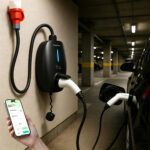
The global electric vehicle revolution is accelerating fast. 2026 is a pivotal year for EV charging technology and infrastructure. According to market research, the global electric car charger market grew from 12.45billionin2025to12.45billionin2025to15.43 billion in 2026. That is a compound annual growth rate of 23.9%. In fact, the broader EV charging equipment market may reach $200 billion by 2030. Global EV sales exceeded 17 million units in 2024, which was 20% of all new cars sold worldwide. The IEA projects that sales will surpass 20 million units in 2026. Consequently, one of every four new cars will be electric.
For manufacturers, installers, and EV owners, this rapid expansion brings huge opportunities. However, it also creates real challenges. Understanding these changes is essential. At Changzhou Fisher Electronic Technology Co., Ltd., we help you navigate this new landscape.
Connector Standards: Finally Moving Toward One System
One of the biggest developments in 2026 is the shift toward standardized charging connectors. For years, EV drivers faced a frustrating patchwork of incompatible plugs. North America used CCS1, while Europe used CCS2. Meanwhile, China adopted GB/T, and Japan stuck with CHAdeMO.
Now the industry is finally consolidating. North America is rapidly adopting the NACS standard. Tesla originally developed NACS, but it is now standardized as SAE J3400. Major automakers like Ford, GM, Hyundai, and Volvo have confirmed NACS integration into their future EVs.
In Europe, CCS2 remains mandatory. It supports three-phase AC charging. As a result, European drivers can charge much faster at home or at public stations compared to North America. On the other hand, China’s GB/T standard dominates the world’s largest EV market. In 2024, nearly half of all car sales in China were electric, which is over 11 million units.
Understanding these regional differences is essential. Whether you are selecting a home charger, expanding a fleet, or manufacturing equipment for export, you need the right connector strategy.
Smart Charging: Intelligence Is No Longer Optional
Beyond physical connectors, modern EV chargers have become incredibly intelligent. Smart charging features are no longer luxuries; they are baseline expectations. The Open Charge Point Protocol (OCPP) has emerged as the gold standard. For example, OCPP 2.0.1 enables communication between chargers and management systems.
What does that mean for you? It enables remote diagnostics, firmware updates, smart charging profiles, and secure user authentication. Today’s residential and commercial chargers offer app-based control. You can schedule charging, adjust current, track energy costs, and update firmware over the air.
Key features like dynamic load management and solar surplus charging are becoming common. Therefore, you can optimize charging around off-peak electricity rates or renewable energy generation. For fleet operators, OCPP compliance is critical. It allows centralized monitoring, predictive maintenance, and the ability to switch networks without replacing hardware. That flexibility is a deal-breaker in commercial procurement.
Bidirectional Charging: Your EV as a Home Battery
Another breakthrough gaining momentum in 2026 is bidirectional charging. This includes vehicle-to-home (V2H) and vehicle-to-grid (V2G) applications. The technology turns your EV into a mobile energy storage unit. For instance, it can power your home during outages. Likewise, it can feed energy back into the grid.
The bidirectional EV charger market is now worth $1.41 billion. Moreover, it is projected to grow at 17.7% annually. At least eight U.S. states are developing programs to export energy from EVs, and that number will rise throughout 2026.
For homeowners with solar panels, this is a game changer. You can store excess daytime solar energy in your EV battery. Then you can use that energy to power your home at night. This dramatically reduces electricity costs and increases your energy independence. Additionally, for grid operators, V2G-capable EVs help balance supply and demand. They integrate renewable sources like wind and solar more effectively.
Real Pain Points: What EV Owners Still Struggle With
Despite all this progress, EV owners still face real frustrations. J.D. Power’s 2025 Home Charging Study revealed some worrying trends. Satisfaction with Level 2 portable stations dropped 21 points, while permanently mounted Level 2 chargers saw an 11-point drop.
So what is the biggest issue? Charging speed. Users who reported slower-than-expected speeds showed a staggering 141-point drop in satisfaction. That eclipsed any other reported issue. Connectivity problems also plague the industry. For example, permanently mounted Level 2 chargers reported 39 problems per 100 units, and 31% of those were tied to Wi-Fi or app functionality.
Here is a telling example. A new BMW i4 owner loved his solar-powered home charging setup. However, when he tried to charge away from home, he faced an hour of frustration. Failed credit card readers, poor cell coverage, and multiple required app downloads. This is the core challenge of 2026. The technology works, but the human experience has not caught up.
What High-Quality EV Chargers Must Deliver
For manufacturers like us, addressing these pain points is our foundation. High-quality EV chargers must deliver consistent charging speeds, not theoretical maximums that rarely appear in real-world conditions.
They must also offer robust connectivity options. Wi-Fi, Ethernet, 4G, and Bluetooth are all important. Fallback mechanisms are critical too. Charging should continue even when cloud connectivity is interrupted. Furthermore, OCPP compliance must be implemented correctly, not just advertised as a bullet point. Thorough testing across real-world scenarios is a must.
Compatibility with multiple charging standards is equally essential. Whether through native support for NACS, CCS, or GB/T, or through high-quality adapters, communication protocols must match the vehicles that will actually use them.
Safety Certification: The Non-Negotiable Foundation
Safety certification separates industry leaders from the rest. Global market expansion requires navigating a maze of regional safety standards. To enter the European Union, you need CE certification under EN 61851. For North America, UL 2594 is required. And for global recognition, CB certification based on IEC 61851 is the best route.
Each certification has unique requirements. Creepage distance, insulation coordination, and protocol communication all differ. Mistakes in any of these areas can lead to test failures, long delays, and financial losses.
A well-engineered EV charger should include comprehensive electrical protection. Over-voltage, over-current, and over-temperature safeguards are standard. The casing should be flame-retardant and UV-resistant. It must also withstand temperatures from -40°C to 85°C. These are not premium features. They are mandatory for any charger that hopes to serve customers reliably.
Market Opportunity: Why You Should Act Now
The market opportunity is immense and still growing. The U.S. NEVI Formula Program allocated 5billionforcharginginfrastructure.Ithassurvivedlegalchallenges.Asaresult,5billionforcharginginfrastructure.Ithassurvivedlegalchallenges.Asaresult,885 million remains available for states in fiscal year 2026.
Meanwhile, EV sales in emerging markets surged more than 60% in 2024. Thailand reached 9% EV market share, and Brazil more than doubled its EV sales to 125,000 units. By 2026, about 30% of charging equipment will be produced through localized manufacturing. That percentage will grow rapidly.
For businesses and individuals, waiting no longer offers any advantage. The technology is ready, and the infrastructure is expanding faster than ever. The economic case for EVs improves each month. Charging costs decline while vehicle ranges increase.
How to Choose the Right EV Charging Partner
So what should you look for? First, prioritize charging speed and reliability. A charger that consistently delivers its rated power will serve you far better than a cheaper alternative that creates daily frustrations.
Second, look for OCPP compliance and robust connectivity. These ensure your charger stays useful as technology evolves. That way, you avoid obsolescence within a few years.
Third, pay attention to safety certifications. Products that have passed UL, CE, or CB standards are not expensive for no reason. They incorporate the engineering and materials needed for years of safe operation.
Finally, choose a partner who understands both technical intricacies and real-world driver needs. You need products designed not merely to meet specifications but to solve actual problems that EV owners face every day.
Plug Into the Future with Confidence
The transition to electric mobility is not a distant future. It is the present, and it is accelerating faster than most predictions suggested just a few years ago.
At Changzhou Fisher Electronic Technology Co., Ltd., we are committed to that future. We deliver EV charging solutions that combine power, intelligence, safety, and genuine usability. Whether you are charging at home, at work, or on the road, we believe the experience should be simple, reliable, and frustration-free.
The technology has arrived. The infrastructure is growing. The only question remaining is: are you ready to plug in? Contact us today to learn more about our EV charger products and how we can support your electric mobility journey.