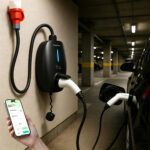
The global shift to electric vehicles is accelerating every single day. More families, businesses, and fleet operators are switching to EVs for lower fuel costs, zero emissions, and a quieter driving experience. But one thing remains clear: without a reliable charger, even the best electric vehicle cannot deliver a smooth driving experience. Changzhou Fisher Electronic Technology Co., Ltd. is a professional manufacturer and supplier of high-quality EV charging equipment. We focus on research, development, production, and global sales of safe, efficient, and smart EV chargers. This guide covers everything you need to know about EV chargers, including product knowledge, industry trends, common user pain points, and professional solutions to help you make the best choice for your home or business.
What Is an EV Charger and How Does It Work?
An EV charger is a specialized device that safely supplies electrical energy to recharge an electric vehicle battery. It acts as a bridge between the power grid and the car’s battery system. A high-quality charger controls voltage, current, and temperature to protect the battery and ensure stable charging.
Modern EV chargers are equipped with intelligent control systems. They can communicate with the vehicle, adjust charging speed automatically, and provide real-time safety monitoring. Professional chargers also support remote control, fault alerts, and automatic power-off functions. These features improve safety, convenience, and battery service life.
Low-quality chargers may seem cheaper at first, but they often lead to slow charging, overheating, circuit damage, or even safety risks. For long-term use, investing in a certified and reliable EV charger is the most cost-effective and secure choice.
AC Chargers vs. DC Fast Chargers: Which Is Right for You?
EV chargers are divided into two main categories: AC chargers and DC fast chargers. They serve different usage scenarios and have distinct differences in power, speed, installation, and price.
AC EV Chargers (Level 2)
AC chargers are the most common choice for home, apartment, workplace, and small business use. They provide low to medium power, usually from 3.6kW to 22kW.
AC power is converted inside the vehicle through its on-board charger. This design makes AC chargers more affordable and easier to install. Most households can install a Level 2 AC charger without major electrical grid upgrades.
A full charge takes 4 to 8 hours, making AC chargers perfect for overnight home charging or all-day workplace charging. AC charging is stable and gentle on batteries, supporting long-term daily use. Fisher home AC chargers are compact, quiet, and designed for safe and stable family use.
DC Fast Chargers
DC fast chargers convert power inside the charger unit and deliver high-power direct current directly to the battery. They bypass the vehicle’s on-board charger to achieve ultra-fast charging speed.
DC chargers range from 60kW to 600kW. They can recharge most EV batteries to 80% in just 15 to 30 minutes. They are widely used in highways, shopping malls, public parking lots, logistics centers, and fleet stations.
Modern DC chargers use liquid-cooled technology, high-efficiency modules, and intelligent heat dissipation systems. They support high-frequency use and long service life. Fisher commercial DC chargers provide stable performance for high-traffic public environments.
Global EV Charger Connector Standards
Connector compatibility is one of the most important factors when choosing an EV charger. Different regions use different connector standards. Using an incompatible connector will make charging impossible.
- Type 2: Widely used in Europe, Asia, Australia, and the Middle East for both AC and DC charging.
- CCS: Includes CCS1 (North America) and CCS2 (global). It is the most popular global standard for DC fast charging.
- NACS: Compact and durable connector widely used in North America.
- CHAdeMO: Mainly used for older Japanese electric vehicles.
Fisher EV chargers support all major global connectors. We also provide customized versions for different regional markets. Our chargers ensure full compatibility with nearly all electric vehicles on the market.
Key Features of a High-Quality EV Charger
When selecting an EV charger, you should pay attention to the following core features. They directly affect safety, efficiency, durability, and user experience.
Full Safety Protection System
Professional EV chargers must include over-voltage, under-voltage, over-current, leakage, lightning, and over-temperature protection. They should have IP54 or IP55 waterproof and dustproof ratings for reliable outdoor use.
Smart Connectivity and Control
Modern chargers support WiFi, Bluetooth, and 4G remote monitoring. Users can check charging status, set charging schedules, and make payments through mobile apps.
Dynamic Load Balancing
This intelligent function distributes power evenly among multiple chargers. It avoids grid overload and reduces expensive electrical upgrades. It is highly valuable for commercial and parking lot projects.
OTA Firmware Updates
OTA updates keep chargers secure and efficient over time. They fix security vulnerabilities, improve system stability, and add new functions without replacing the device.
Wide Temperature Adaptation
Reliable chargers work stably in extreme weather conditions, from -30°C to 55°C. They adapt to cold winters and hot summers in different climate zones.
2026 EV Charging Industry Trends
The EV charging industry is developing rapidly. New technologies, policies, and market demands are shaping the future direction of the sector.
Ultra-Fast Charging Becomes Mainstream
With the rise of 800V high-voltage EV platforms, 350kW+ ultra-fast chargers are becoming standard. Liquid-cooled cables and high-efficiency modules support safer and faster charging.
AI-Powered Smart Charging
AI technology improves fault prediction, power allocation, and user experience. Smart charging stations automatically adjust power based on grid load and real-time demand.
Bidirectional Charging (V2G & V2H)
Bidirectional chargers allow EVs to send power back to homes or grids. V2H provides emergency backup power during blackouts. V2G helps stabilize the grid and allows users to earn extra income.
Stricter Certification and Energy Efficiency
Many countries now enforce mandatory safety certifications for EV chargers. Higher energy efficiency standards eliminate low-quality products and protect consumer rights.
Rapid Growth in Fleet and Rural Markets
Electrification of logistics vehicles, delivery vans, and buses continues to accelerate. Meanwhile, rural charging infrastructure is expanding with strong government support.
Common EV Charging Pain Points and Professional Solutions
Many EV users face daily charging problems. These issues reduce convenience and cause frustration. Fisher provides targeted solutions for the most common pain points.
Pain Point 1: Unreliable Public Chargers
Many public chargers break down easily and have long repair cycles. Users often arrive at out-of-service stations.
Solution: Fisher uses high-grade components and strict quality control. Our cloud monitoring system detects faults early and minimizes downtime.
Pain Point 2: Slow Charging Speed
Low-power chargers cannot meet modern EV demands. Long waiting times reduce travel efficiency.
Solution: Fisher provides a full range of high-power chargers. Our DC fast chargers support ultra-fast charging for all latest EV models.
Pain Point 3: Compatibility Failure
Different connectors and standards lead to charging failures, especially during cross-region travel.
Solution: Fisher chargers support all mainstream connectors. They work with almost all electric vehicles worldwide.
Pain Point 4: Complex Operation
Complicated apps, registration, and payment systems make charging difficult for new or elderly users.
Solution: Fisher uses simple touch screens and one-key operation. Plug & Charge function allows fully automatic charging.
Pain Point 5: High Installation Cost
Grid upgrades and complex wiring increase investment costs for homes and businesses.
Solution: Fisher chargers support easy installation. Load balancing and solar integration reduce long-term expenses.
Why Choose Changzhou Fisher Electronic Technology?
Fisher is a trusted EV charger manufacturer based in Changzhou, China. We combine professional R&D, modern production lines, and strict quality testing to deliver reliable products.
- Full product line for home, commercial, and public use
- Global certifications: CE, FCC, UL, 3C, and CB
- Strong R&D capability and stable quality control
- Custom OEM & ODM services for global customers
- One-stop solution from design to after-sales support
- 24/7 global technical support
Our products are sold to Europe, North America, Asia, the Middle East, and beyond. We serve households, property developers, fleet operators, and government infrastructure projects.
The Future of EV Charging Technology
EV charging will continue moving toward higher speed, smarter control, and greener energy integration.
- Automatic charging robots will improve convenience and flexibility
- Wireless charging will provide cable-free charging experience
- Solar-connected charging stations will reduce carbon emissions
- Global standardization will improve compatibility worldwide
Fisher continues investing in new technology research. We aim to launch innovative products and lead the future of the EV charging industry.
Conclusion
A reliable EV charger is the foundation of a great electric driving experience. It directly affects safety, efficiency, battery life, and daily convenience. Whether you are a home user, business investor, or fleet manager, choosing a professional manufacturer is critical.
Changzhou Fisher Electronic Technology Co., Ltd. focuses on safe, smart, and efficient EV charging solutions. We provide high-quality products and professional services to global customers. With advanced technology, strict quality control, and complete certifications, Fisher is your ideal long-term partner.
If you are looking for a trusted EV charger supplier, welcome to contact us. Let us work together to build a cleaner, smarter, and more sustainable future for electric mobility.