Introduction
Every EV charging business now evaluates compliance alongside ROI. European regulation changes the rules for public charging hardware from 2026 onward. New or renovated public chargers must support ISO 15118. This rule moves Plug & Charge from software feature to mandatory hardware capability.
Most operators focus first on upfront hardware costs. However, compliance decisions shape long-term operational income and risk profiles. Poor hardware choices create hidden costs, project delays and early asset replacement. Smart buyers select ISO 15118-native chargers to balance regulatory compliance and commercial returns. This Shopify blog explains how the new EU standard changes your charging business case. It also covers how our EV charging stations boost your return on investment.
The Regulatory Shift: Plug & Charge as Hardware, Not Software
Let us start with the core regulatory update. EU AFIR delegated rules apply to all newly installed or renovated public EV chargers starting in 2026. These charging points must support ISO 15118 communication. This standard enables Plug & Charge, the automatic authentication workflow between EV and charger.
In past years, many charging hardware platforms added Plug & Charge via software updates. Vendors sold base chargers and later activated the function with firmware. That model worked for optional features. It cannot satisfy the 2026 requirement.
The new requirement targets hardware readiness. Your charger must contain the required communication, security and processing components natively. Firmware alone cannot create the required hardware-level support. This distinction changes your purchasing checklist completely.
Renovation projects deserve special attention. The rule applies not only to brand-new chargers. It also covers renovated public charging points. Simple cable replacement does not count as renovation. Major hardware upgrades trigger the ISO 15118 mandate. Contractors and site owners must assess each upgrade carefully.
How Plug & Charge Changes Driver Behaviour and Site Utilisation
Now we turn to customer behaviour, a key driver of charging revenue. Traditional charging workflows introduce friction at session start. Drivers locate the charger, launch an app, log in and authenticate. Many users abandon sessions before charging starts. Abandoned sessions waste available charging capacity.
Plug & Charge removes these friction steps. The driver connects the charging gun. The vehicle and charger exchange secure certificates. The system authenticates the account and starts charging automatically. No app login, no QR scan, no RFID tap.
This simplicity lifts session success rates. More drivers complete charging sessions when they visit your site. Higher session completion directly increases energy sales. It also improves customer perception of your charging network.
EV travellers prioritise reliable, easy charging. Sites with Plug & Charge build stronger brand loyalty. Returning customers deliver steady recurring revenue. In contrast, sites with frequent authentication failures lose users to competing charging locations.
Cross-border interoperability also grows in importance. European EV drivers travel across national borders. ISO 15118 creates a common communication language. Drivers can use compatible chargers in different countries without switching service contracts. Your charging site becomes more attractive to regional travellers.
Lower Operational Costs Improve Long-Term ROI
Next, consider operational expenses, a major part of charging total cost of ownership. Charging operators spend heavily on support and manual session management. Failed authentication creates customer calls, refund requests and site visits. Each failed session erodes your margin.
ISO 15118 reduces these operational pain points. Authentication happens inside the secure vehicle-to-charger link. It removes dependence on physical cards or mobile network connectivity for user login. Fewer session failures reduce support workload.
Accurate session accounting is another major benefit. Each charging session binds to a unique digital certificate. You get precise logs for energy consumption, time use and customer identity. This data simplifies automated billing and fleet cost allocation. Fleet operators especially value this feature. They eliminate manual logging and reconciliation work.
Our charging stations integrate native ISO 15118 hardware. They deliver stable certificate exchange and consistent session logging. You can connect to your existing charging management platform through OCPP. You keep your preferred backend while unlocking Plug & Charge capability.
Security Built Into ISO 15118 Protects Your Charging Network
Cybersecurity risks grow as charging infrastructure connects to cloud platforms and vehicle systems. Old charging systems rely on weak authentication methods. RFID cards can be copied. Mobile app accounts face password theft risks. These vulnerabilities create fraud and unauthorised charging.
ISO 15118 uses public key infrastructure and encrypted communication. Vehicle and charger exchange digital certificates during each handshake. The system verifies identity before activating power. This layered security reduces fraud and unauthorised charging events.
Our EV charging hardware includes secure elements for certificate storage. These dedicated hardware components protect private keys. They resist tampering better than software-only key storage. This design aligns with EU expectations for connected energy infrastructure.
Strong security also protects your business reputation. A security breach on your charging network damages customer trust. Native ISO 15118 hardware gives you a robust foundation for secure operations.
Plan for Future Standards Beyond 2026
The 2026 ISO 15118 rule marks only the first stage of EU charging regulation. Later phases will introduce ISO 15118-20 requirements. This advanced standard supports vehicle-to-grid services and multi-contract handling.
Hardware built with native ISO 15118 architecture can receive future firmware updates. It can enable V2G and advanced demand response features later. Hardware that only supports Plug & Charge via software cannot support these upgrades. It will hit technical limits before the end of its service life.
Long asset life improves ROI. Charging stations require large upfront capital outlay. You want your investment to operate reliably for many years. Choosing native ISO 15118-ready hardware avoids premature replacement costs. It keeps your site compliant as rules evolve.
Our EV Charging Hardware: Designed for European ISO 15118 Compliance
Our charging product line addresses the new European market reality. We engineer each public charger with native ISO 15118 hardware from manufacturing. Plug & Charge is not a post-sale software upgrade. It forms part of the core hardware design.
We complete interoperability testing with major EV OEMs. Our units work consistently across many EV models. We provide compliance documentation for tender submissions and regulatory audits. You can deploy new public charging sites or renovate existing stations confidently.
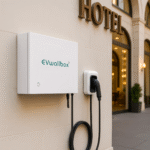
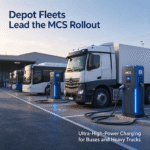
We support both AC and DC public charging configurations. Our stations fit roadside, retail parking, hotel and fleet depot deployments. You can select power levels and connector types to match your site layout and traffic profile.
Our team also offers implementation guidance for certificate management. Plug & Charge requires integration with PKI trust providers. We explain how to connect your charging assets to established certificate ecosystems. This guidance reduces your project implementation risk.
Buyer Checklist: Verify ISO 15118 Hardware Before Purchase
Many buyers still confuse software-enabled and hardware-native Plug & Charge. Use this simple checklist during supplier evaluation.
First, confirm that the charger includes dedicated hardware components for ISO 15118 communication and secure certificate storage. Ask for hardware block diagrams if needed.
Second, request cross-OEM interoperability test reports. A charger may pass basic protocol tests yet fail with popular EV models. Real-world interoperability data matters.
Third, confirm compliance alignment with EU AFIR 2026 requirements for new and renovated public charging points. Check whether documentation supports audit requirements.
Fourth, confirm OCPP compatibility with your existing charging management software. You want ISO 15118 features to work alongside your current backend tools.
Fifth, clarify certificate management support. Ask your supplier to explain their PKI integration process and support scope.
Closing Remarks
Compliance is now a core commercial consideration for EV charging infrastructure. Europe’s 2026 ISO 15118 mandate redefines Plug & Charge as a hardware requirement. Software-only solutions cannot meet the new standard.
ISO 15118-ready chargers deliver benefits beyond compliance. They lift session success rates, boost site utilisation and cut operational support costs. They also add robust security and future upgrade paths for V2G services. All these factors improve your infrastructure ROI.
Our EV charging stations offer native ISO 15118 hardware support for European deployments. We help you build compliant, user-friendly charging sites with stronger long-term returns. Contact our sales team to review technical specs and compliance packages for your next charging project.