Introduction
Canada’s EV charging landscape is undergoing a clear strategic shift. The industry no longer prioritizes building more public charging stations. Instead, operators focus heavily on real‑world station performance. Paren’s Q2 2026 reliability index delivers eye‑opening market data. Canada’s overall public charging network scores 91 in this report. Leading metropolitan markets in the United States hit 97 and above. This gap exposes persistent pain points for everyday EV drivers. Public charging downtime creates frustration and unexpected delays.
Operators now compete on uptime, maintenance and smooth payment flows. User experience also becomes a core competitive battlefield. Even well‑built public stations can fail without advance warning. Many EV owners seek stable backup solutions for daily travel needs. A portable EV wallbox with app control fills this critical market gap. It brings real‑time monitoring and predictable charging outcomes. No more unpleasant surprises when you rely on public infrastructure.
Today’s EV buyers care deeply about live status alerts from charging apps. They want full visibility over every charging session in advance. This article explores core value of portable app‑enabled EV wallboxes. It covers market pain points, key functions and practical business values. It also shares actionable insights for B‑side buyers and end users.
The Evolving Reality of Public EV Charging Infrastructure
Public charging expansion once dominated North American EV policy talks. Governments poured funds into constructing new station hardware. Stakeholders assumed more stations would solve most driver anxiety.
However, quantity never directly equals usable charging capacity. Paren’s Q2 2026 reliability index confirms this important truth. Canada’s national charging network achieves a reliability score of 91. Top‑tier US metro areas reach reliability scores above 97 points. This measurable gap reveals hidden operational challenges across sites. Many physically intact stations still suffer frequent offline incidents. Minor hardware faults can take days for teams to detect and repair. Payment modules freeze, cable connectors wear and software glitches appear. Drivers arrive at stations only to find them non‑functional. These bad moments damage trust in the whole public charging ecosystem.
Now competition rules for charging operators have fundamentally changed. Operators no longer win market share only by adding new hardware. They compete on uptime efficiency and fast response maintenance. Smooth payment workflows and consistent user experience also matter. Even with great operator efforts, risks of public charging failure remain. Weather damage, power grid fluctuations and vandalism create uncertainty. No driver wants to plan trips around unreliable public charging points. Hence, dependable backup charging solutions gain growing market demand. Portable EV wallboxes with app control step into this market window. They complement public networks instead of fully replacing them.
Why Public Charging Shortfalls Drive Demand for Portable EV Wallboxes
Many EV drivers trust public charging for long‑distance journeys. Yet real‑world failures ruin carefully planned travel schedules quickly. You may reach a station after a long drive and find it offline. You waste precious time searching for alternative nearby chargers. This scenario happens repeatedly across Canadian and US road networks. Fixed home wallboxes work well for private residential parking spots.
But not every EV user owns a permanent private parking location. Renters, frequent movers and road‑trip travelers face strict limits. Fixed wallbox installation involves complex construction and high costs. It also requires property owner approval for wall‑mount modification. Portable EV wallboxes remove most of these tough installation barriers. You can move the unit between different locations with simple setup. Use compatible power outlets instead of permanent hard‑wired fixtures. This flexibility solves real‑life pain points for broad user groups.
Still, hardware mobility alone cannot deliver complete user satisfaction. Smart app control elevates portable wallboxes to a higher product level. Modern EV owners expect digital tools alongside physical charging gear. They want clear data and proactive notifications for every session. Live status alerts sit high on end‑user priority checklists. Our market observations confirm this consistent customer preference. Buyers actively ask about real‑time feedback during product consultations. They hate unexpected charging interruptions without prior warning. Public chargers rarely send alerts before service breakdown occurs. Portable wallboxes with app functions fix this obvious weak point.
Core Practical Benefits of Portable EV Wallbox with APP Control
Real‑Time Session Monitoring Eliminates Unpleasant Surprises
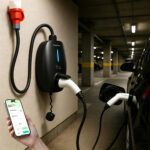
The app connects wirelessly with your portable EV wallbox device. It pulls live operational data throughout your whole charging cycle. You view current charging power, consumed energy and remaining time. You check device temperature and running status on your phone screen. And you do not need to stand beside the charger to track progress. You can handle other personal tasks while charging proceeds steadily. If abnormal conditions emerge, the app pushes instant user notifications. Over‑temperature warnings and power fluctuation alerts arrive promptly. Users take quick corrective actions before serious damage occurs. This feature directly addresses frustrations from faulty public chargers. Public stations often give zero warning before complete shutdown. App‑based monitoring brings full transparency to private charging sessions. It builds stable confidence for EV drivers in daily usage scenarios.
Flexible Portability Fits Multiple Real‑World Usage Scenarios
Portable design separates this product from traditional fixed wallboxes. You do not rely on permanent wall‑mount installation conditions. Set it up at home for regular overnight EV replenishment work. Pack it into your vehicle trunk for cross‑province road trips. Deploy it at temporary work parking lots or holiday rental properties. It works wherever you access matching standard power supply outlets. Renter households gain huge convenience from this portable feature. They avoid complicated renovation work for fixed charging equipment. Business fleets also benefit from this flexible deployment capability. Fleet managers move units between different parking bays as needed. They adapt charging resources to shifting daily vehicle usage patterns. This mobility expands usable charging scenarios far beyond home garages.
Simplified User Experience Matches Modern EV Driver Expectations
Good user experience ranks high in today’s charging industry competition. Operators polish payment systems and interfaces for public charging points. Our portable wallbox app follows this same user‑centered design logic. You complete session start‑stop operations with a few screen taps. And you view historical charging records and cumulative energy consumption. You set scheduled charging to take advantage of off‑peak electricity rates. Scheduled charging cuts overall energy costs for individual end users. Business clients can export charging logs for internal cost accounting. No complicated manual configuration steps block ordinary operators. New users master core app functions within several short minutes. Clear visual feedback replaces confusing indicator lamp signals. Every interaction follows intuitive logic for non‑technical consumers.
Reliable Backup When Public Charging Infrastructure Lets You Down
Even well‑maintained public networks face occasional service failures. Bad weather, grid overload or component failure trigger unexpected outages. Your portable app‑controlled wallbox acts as your trusted safety net. You locate a compatible power outlet and activate your own charging unit. You no longer fully depend on third‑party public charging operators. The app keeps you informed of every step during emergency charging. You know exactly when your vehicle reaches your target battery level. This backup capability delivers massive peace of mind for EV travelers. It complements public networks rather than trying to replace them. Drivers combine public fast‑charging and portable wallbox resources wisely. They build a hybrid charging strategy for all travel conditions.
Business Value for B‑Side Buyers and Global Market Opportunities
North American EV markets keep growing at steady annual speeds. Canada and the United States show distinct charging infrastructure trends. Paren Q2 2026 reliability data highlights the performance‑focused shift. Buyers care less about pure hardware parameters these days. They prioritize real‑world reliability, digital features and user comfort. B‑side purchasers cover property managers, fleet operators and resellers. Rental housing operators face rising EV charging demands from tenants. Many buildings cannot install large numbers of fixed wallbox devices. Portable app‑controlled wallboxes offer a cost‑effective intermediate solution. Property teams deploy units flexibly without heavy construction projects. Tenants access controllable charging with clear app‑driven feedback. Fleet companies manage multiple electric service vehicles every workday.
App logs help track energy usage for each individual company vehicle. Managers optimize charging timing to lower overall operational expenses. Resellers also gain strong selling points from this product combination. You reference public‑charging‑reliability statistics in sales conversations. You explain how this portable unit solves documented market pain points. Live app alerts become a powerful differentiator against competing goods. End‑users actively recognize and value this specific smart function. Market surveys repeatedly confirm demand for real‑time charging status. You do not sell only a piece of charging hardware to customers. You sell confidence, flexibility and protection from public‑charging risk.
Key Considerations for Selection and Practical Deployment
Portable EV wallboxes bring obvious advantages for modern EV users. Buyers still need to check several critical points before final purchase.
First, confirm regional electrical standard compatibility for your area. Match plug specifications with local outlet configurations in use. Second, verify stable wireless communication between wallbox and app. Signal stability directly determines real‑time alert delivery performance. Third, pay attention to built‑in safety protection mechanisms of units. Over‑current, over‑voltage and over‑temperature safeguards are essential. These hardware protections cooperate with app‑side warning notifications. Fourth, evaluate app usability and long‑term software update support. Ongoing updates maintain good function across new EV model releases. Business clients should also think about after‑sales service arrangements. Fast technical support reduces downtime for shared‑use deployment sites. With proper preparation, users unlock full value of this smart hardware.
Conclusion
North America’s EV charging industry has entered a new development era. The focus moves away from simple station quantity toward real‑world reliability. Paren’s Q2 2026 reliability index illustrates this clear market transition. Public charging operators compete on uptime, maintenance and user experience. Yet occasional public‑charging disappointments still trouble many EV drivers. A portable EV wallbox with app control delivers a dependable backup option. It offers portability, safety and real‑time charging status notifications. Live alerts prevent unexpected charging failures for end‑user customers.
This product works for private households, renters and commercial fleets. It fills gaps left by imperfect public charging infrastructure systems. It creates new business opportunities for resellers and property operators. As EV ownership expands, hybrid charging strategies grow more important. Combine public network resources with portable smart wallbox solutions. You gain stable, predictable charging for every daily travel requirement. Invest in portable app‑controlled EV wallboxes for your EV ecosystem today.