Winter is coming. For electric vehicle owners, that often means one thing: range anxiety. You have heard the stories. Batteries lose power in the cold. Charging takes longer. Heaters drain the battery. Some of these concerns are real. Others are exaggerated. The truth is that winter driving does affect EV range. But with the right habits and equipment, you can minimize the impact. You might even enjoy winter driving more than you expected. At Changzhou Fisher Electronic Technology Co., Ltd., we want you to charge and drive with confidence all year long. This guide explains how cold weather affects your EV. It also provides practical tips to preserve range, speed up charging, and stay comfortable on the road.
How Cold Weather Affects EV Batteries and Range
Understanding the problem is the first step to solving it. Cold weather reduces EV range for several reasons. None of them are unique to electric cars. Gasoline vehicles also lose efficiency in winter. The difference is that gas stations are everywhere. Charging stations are still catching up.
Chemical reactions slow down in the cold. Lithium-ion batteries work by moving ions between two electrodes. Low temperatures slow this movement. The battery can still deliver power, but less efficiently. At 20°F (-7°C), range can drop by 10% to 20%. At 0°F (-18°C), the drop can reach 30% to 40% for some models.
Battery conditioning consumes energy. Your EV wants to protect its battery. When temperatures drop, the battery management system may heat the battery before allowing full charging or discharging. That heating draws power directly from the battery. It is necessary for long-term health but reduces available range.
Cabin heating is energy-intensive. Gasoline cars use waste engine heat to warm the cabin. EVs have no engine waste heat. They must generate heat from battery power. A resistive heater can draw 3 to 6 kW. That is like running two or three Level 2 chargers just to keep you warm. Over an hour of driving, cabin heating alone can consume 10 to 15 miles of range.
Cold air is denser. Aerodynamic drag increases in cold, dense air. Your car pushes harder against the atmosphere. This affects all vehicles, but EVs are more sensitive because every efficiency point matters.
Tire pressure drops. Cold air contracts. Under-inflated tires increase rolling resistance. Lower pressure means more energy wasted as heat between the tire and the road.
The good news is that you can fight back. Most range loss is manageable with simple adjustments.
Precondition Your Battery While Plugged In
Preconditioning is your single most powerful winter tool. Here is how it works.
Before you drive, tell your EV to warm up the battery and cabin while the car is still plugged into the charger. The charger provides the power. Your battery stays full. When you unplug and drive away, the battery is already at an optimal temperature. The cabin is warm. You have not used any range for heating.
Most modern EVs support preconditioning through their app or onboard scheduler. Set a departure time. The car handles the rest. You step into a warm car with a happy battery and full range.
Without preconditioning, you would heat the battery and cabin after unplugging. That draws from your range. Preconditioning can save 10 to 20 miles of range on a cold morning.
For best results, precondition while connected to a Level 2 charger. Level 1 may not provide enough power to both heat the battery and maintain charge. A 32-amp or 40-amp Level 2 charger is ideal.
If your EV does not have a preconditioning feature, you can manually warm the car while plugged in. Turn on the climate control from the app or inside the car. Let it run for 10 to 15 minutes before you leave. The battery will not warm as evenly, but the cabin heat will be free.
Use Seat Heaters Instead of Cabin Heat
Cabin heaters are efficient at turning electricity into heat. But they still use a lot of power. Seat heaters are much more efficient.
A seat heater uses about 50 to 100 watts per seat. A cabin heater uses 3,000 to 6,000 watts. That is 30 to 60 times more energy. By using seat heaters and steering wheel heaters, you can stay comfortable while reducing cabin heat.
Set your cabin temperature to 65°F (18°C) instead of 72°F (22°C). Turn on the seat heaters. You will stay warm. Your range will thank you.
If you have passengers, ask them to use seat heaters too. The savings add up. On a 30-minute commute, lowering cabin heat by 7°F can save 3 to 5 miles of range.
In very cold conditions, you still need cabin heat to keep windows defogged. Use the defrost mode only as needed. Do not run it continuously. Also recirculate cabin air. Heating fresh outside air takes much more energy than reheating already warm interior air.
Park Indoors or Use a Block Heater
Where you park matters enormously in winter. A garage keeps your car warmer than outdoor parking. Even an uninsulated garage is better than open air.
If you park outdoors, consider using an engine block heater. Wait, EVs do not have engines. But they have battery heaters. Some EVs allow you to plug in a battery blanket or oil pan heater designed for EVs. These small heaters keep the battery above freezing. They draw very little power. Over a long cold night, they can save substantial range.
If you do not have access to a garage or battery heater, at least park in a spot that gets afternoon sun. Direct sunlight warms the dark paint and glass. The interior and battery will be slightly warmer when you return.
For workplace charging, encourage your employer to install chargers inside a parking structure. Covered parking with chargers is a huge benefit for winter commuting.
Reduce Speed and Drive Smoothly
Highway driving consumes more energy than city driving. This is true in all weather. In winter, the difference is even larger because aerodynamic drag increases with cold air density.
Reduce your highway speed by 5 to 10 mph. The energy savings are significant. At 70 mph, you might use 30% more energy than at 60 mph. In winter, that 30% could be the difference between reaching your destination and needing an emergency charge.
Accelerate gently. Regenerative braking works well in cold weather, but hard acceleration wastes energy. Smooth, steady driving preserves range. Use cruise control on highways to maintain constant speed.
Plan your trips to avoid unnecessary detours. Combine errands into one trip. A warm car uses less energy to heat than a cold car. Multiple short trips with cooldowns in between are less efficient.
Monitor Tire Pressure and Use Winter Tires
Cold air reduces tire pressure. For every 10°F drop in temperature, tire pressure decreases by about 1 PSI. Under-inflated tires increase rolling resistance. That wastes energy and reduces range.
Check your tire pressure monthly during winter. Inflate to the manufacturer’s recommended PSI, not the maximum on the tire sidewall. Proper inflation improves range, handling, and safety.
Winter tires are a different question. They improve traction and safety in snow and ice. However, winter tires have higher rolling resistance than all-season tires. They can reduce range by 5% to 10%. That is a trade-off. Safety comes first. If you drive in snowy conditions, use winter tires. Just be aware of the range impact. Adjust your charging plans accordingly.
Some EV owners use low-rolling-resistance winter tires. These are available from brands like Michelin and Continental. They offer good traction with less efficiency loss. Ask your tire dealer for recommendations.
Optimize Charging in Cold Weather
Cold weather affects charging speed, not just driving range. When you plug in a cold battery, the charger may deliver reduced power. The battery management system limits current to protect the battery. As the battery warms up, charging speed increases.
To get the fastest charging in winter, always precondition your battery before arriving at a DC fast charger. Many EVs have a “navigate to charger” feature that automatically conditions the battery when you set a fast charger as a destination. Use it. A preconditioned battery can accept full charging speed immediately. A cold battery may take 15 to 20 minutes to warm up before reaching full speed.
At home, schedule your charging to finish just before you depart. A battery that finishes charging at 6 AM is warmer than one that finished at midnight. The charging process itself generates heat. That heat stays in the battery if you drive soon after.
If you have a smart charger, use its scheduling features. Set it to complete charging 30 minutes before your usual departure time. You get a warm battery and a warm garage from waste heat.
Plan Charging Stops for Road Trips
Winter road trips require more planning than summer trips. Your range is reduced. Charging may take longer. Stations may be busy with other winter travelers.
Use apps like A Better Routeplanner (ABRP) to plan your route with winter conditions. ABRP lets you enter temperature, wind, and precipitation. It calculates realistic range and charging stops. Add a safety margin of 20% to 30% compared to summer estimates.
When you stop to charge, stay in the car if possible. Running the heater while charging uses charger power, not battery power. You can stay warm without reducing range. Just keep the car plugged in until you are ready to drive.
If you must wait outside the car, cover the charge port with a magnetic cover or simply close the door. Snow and ice in the charge port can make plugging in difficult. Keep a small brush or towel in your car to clean the port.
At DC fast chargers, remember that charging speed slows after 80%. In winter, it slows even more. Consider charging only to 70% or 80% if that gives you enough range to the next charger. The last 20% takes disproportionately long. Let the next driver use that time.
Keep Your Charger Ice-Free and Functional
Your home charger needs winter care too. A frozen plug or icy cable can ruin your morning.
If your charger is outdoors, mount it in a location protected from direct snow and ice. A canopy, eaves, or a dedicated charging post with a cover helps. Some chargers have heated plugs. Fisher offers models with plug heaters for extreme climates.
When you unplug your car, shake the cable to remove snow. Hang the plug in its holster with the pins facing down. Water will drain out instead of pooling inside the connector.
If the plug does freeze to your car’s inlet, do not yank it. Use a hairdryer or a portable car heater to warm the connection gently. Do not pour hot water on it. The sudden temperature change can crack plastic components.
For the charger itself, keep vents clear of snow and ice. A blocked vent can cause overheating even in cold weather. The electronics generate their own heat. They need airflow.
If you have a Fisher charger with an LCD screen, wipe snow off the screen gently. Do not use an ice scraper. The screen is durable but not scratch-proof.
Emergency Winter Charging Kit
Prepare a small emergency kit for winter driving. Keep it in your EV along with your regular emergency supplies. Include these items.
- Portable Level 1 charger with a long extension cord rated for 15 amps continuous. In a pinch, you can plug into any standard outlet.
- J1772 to NACS adapter (or the reverse) to use different station types.
- Microfiber cloth to clean charge port pins.
- Small brush to remove snow from the charge port.
- Magnetic charge port cover to keep snow out when parked.
- Hand warmers to warm a frozen latch if needed.
- Printed list of charging networks and customer support numbers. Do not rely on your phone if the battery is low.
Having this kit gives you peace of mind. You may never need it. But if you do, you will be glad you prepared.
Common Winter Charging Myths Debunked
Let us clear up a few persistent myths.
Myth: You should not charge an EV in freezing rain. Fact: EV chargers are weatherproof. UL- and CE-certified chargers are tested for rain, snow, and ice. Charging in freezing rain is safe. Just wipe the plug dry before connecting to avoid ice formation.
Myth: Cold weather permanently damages EV batteries. Fact: Cold does not permanently damage batteries. It temporarily reduces performance. Once the battery warms up, full performance returns. Extreme cold below -22°F (-30°C) can cause damage over time, but most EVs have battery heaters to prevent this.
Myth: You must warm up your EV for 30 minutes before driving. Fact: No. EVs do not need warm-up for the motor or transmission. Preconditioning is nice for comfort and range, but you can drive immediately after starting. The car will limit power until the battery warms, but it will move.
Myth: Regenerative braking does not work in winter. Fact: Regenerative braking works, but it may be reduced when the battery is cold and full. A cold battery cannot accept high charging current. Your car may blend in friction brakes instead. Once the battery warms, full regen returns.
Real-World Winter Range Examples
Let us look at actual data from popular EV models. These numbers are approximate but realistic.
A Tesla Model 3 Long Range rated at 358 miles summer range may achieve 260 to 290 miles at 20°F (-7°C) with preconditioning and moderate cabin heat. Without preconditioning, range could drop to 220 to 250 miles.
A Ford Mustang Mach-E rated at 300 miles may see 220 to 250 miles in winter. A Chevrolet Bolt rated at 259 miles may drop to 180 to 210 miles.
The key takeaway is that range loss is significant but manageable. With careful planning, you can still drive 200+ miles between charges. Most daily commutes are under 50 miles. Winter range is not a barrier for everyday use.
For road trips, simply plan more frequent stops. Charging networks along major highways now have stations every 50 to 70 miles. Even with reduced range, you will rarely be stranded.
Fisher Chargers for Winter Performance
At Changzhou Fisher Electronic Technology Co., Ltd., we design chargers for all climates. Our outdoor-rated models feature IP65 weather sealing. They operate from -40°C to 85°C. Snow, ice, and freezing rain do not affect their performance.
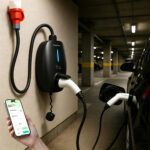
Our smart chargers include preconditioning scheduling. Set your departure time in the app. The charger delivers power to warm your battery and cabin before you unplug. You save range and step into a warm car.
For extreme cold regions, we offer optional plug heaters. These keep the connector warm and ice-free. The heater draws minimal power and cycles automatically based on temperature.
Every Fisher charger includes over-temperature protection for both hot and cold conditions. Your charger will never overheat or freeze up. It just works.
Visit our website to see our full winter-ready lineup. Contact us with any cold-weather questions. We are here to help you drive electric, no matter the forecast.
Drive Confidently All Winter Long
Winter does not have to mean anxiety. With the right habits and equipment, you can enjoy your EV year-round. Precondition while plugged in. Use seat heaters. Park indoors. Monitor tire pressure. Plan your trips. Keep an emergency kit.
Most importantly, do not overthink it. Millions of EV owners drive through winter every year. They learn a few tricks and then forget about the cold. You will too.
Start with one change this week. Set your departure schedule for preconditioning. Notice the difference in range and comfort. Then add another tip. Gradually, winter driving becomes second nature.
At Fisher, we believe that electric driving should be easy in every season. Our chargers are built to handle the cold. Our team is ready to support you. Stay warm, stay charged, and keep moving.
Explore our winter-ready EV chargers today. Your car will thank you. And so will your morning commute.