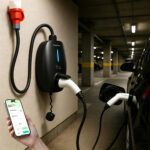
The global shift to electric vehicles is no longer a distant future—it’s happening right now. As governments tighten emission rules and more drivers choose clean energy cars, reliable EV charging infrastructure has become the backbone of modern transportation. At Changzhou Fisher Electronic Technology Co., Ltd., we design, produce and supply high-quality EV chargers for homes, businesses and public spaces. This guide covers essential EV charging knowledge, 2026 industry trends and common user frustrations, with practical solutions to make your EV experience smooth and stress-free.
Understanding EV Charging Basics: Types, Power & Standards
To choose the right charger, you first need to understand core concepts. EV charging technology follows clear categories based on power, design and global standards. These details directly affect charging speed, compatibility and daily use.
AC vs. DC Charging: What’s the Difference?
All EV chargers fall into two main groups: AC chargers and DC fast chargers. Each serves different needs.
AC Chargers (Level 1 & Level 2)
Alternating Current (AC) chargers send grid power to the car’s internal converter. The vehicle then changes AC to DC for battery storage.
- Level 1: Low-power units (1.4–2.4kW) that plug into standard home outlets. They add 4–5 miles of range per hour, ideal for emergency use only.
- Level 2: The most popular choice for homes and workplaces (3.7–22kW). They fully charge most EVs in 4–8 hours, perfect for overnight or all-day use.
DC Fast Chargers (Level 3)
Direct Current chargers convert power inside the unit and send DC straight to the battery. They bypass the car’s converter for ultra-fast speeds.
- DC Fast Chargers: High-power units (50–600kW) that charge 60–80% of a battery in 15–30 minutes. Designed for highways, commercial areas and fleet depots.
Global Connector Standards
Compatibility matters. Four main connector types rule the global market:
- Type 2 (Mennekes): Europe’s standard AC connector, widely used across Asia and the Middle East.
- CCS (Combined Charging System): Includes CCS1 (North America) and CCS2 (global). The most common DC fast-charging standard.
- NACS: Formerly Tesla’s proprietary port, now open to all brands in North America.
- CHAdeMO: Early Japanese standard, mainly on older Nissan and Mitsubishi models.
Fisher chargers support all major standards, ensuring full compatibility with every EV on the road.
Key Technical Terms Every EV Driver Should Know
- kW (Kilowatt): Measures charging power. Higher kW means faster charging.
- BMS (Battery Management System): The car’s internal system that controls charging speed and safety.
- Load Balancing: Smart technology that distributes power evenly across multiple chargers to avoid grid overload.
- IP Rating: Shows water and dust resistance. Most Fisher chargers have IP55 protection for outdoor use.
- OTA Update: Wireless firmware updates to keep chargers secure and functional.
2026 EV Charging Industry Trends Shaping the Market
The EV charging sector evolves quickly. 2026 brings clear shifts from quantity to quality, with technology and policy driving major changes.
1. Ultra-Fast Charging Becomes Standard
New 800V EV platforms demand higher power. Traditional 50kW chargers can’t keep up. In 2026, 350kW+ chargers become the norm. Leading the way: 600kW liquid-cooled DC chargers that add 400+ miles in 10 minutes. Liquid cooling makes cables lighter and prevents overheating, even at extreme power.
2. Smart & AI-Powered Infrastructure
Over 80% of new chargers now include AI, 5G and IoT. Key smart features:
- Dynamic Load Balancing: Cuts peak energy costs by 40–60%.
- Predictive Maintenance: Monitors health 24/7 and fixes issues before failures.
- Plug & Charge: ISO 15118 technology that automatically identifies, authenticates and bills users—no apps needed.
3. Bidirectional Charging (V2G/V2H) Goes Commercial
Vehicle-to-Grid (V2G) and Vehicle-to-Home (V2H) move from tests to real-world use.
- V2G: EVs send power back to the grid during peak hours, letting owners earn money.
- V2H: EV batteries power homes during blackouts.This technology turns cars into mobile energy storage, supporting stable grids and lower bills.
4. Stricter Rules & Industry Consolidation
2026 brings mandatory certifications (like 3C in China) and higher efficiency standards. Low-quality products get pushed out, and the market concentrates on reliable manufacturers. Fisher meets all global safety and efficiency rules, with CE, FCC, UL and 3C certifications.
5. Rural & Fleet Markets Expand
Urban charging networks mature. Focus shifts to rural areas and commercial fleets. Governments offer subsidies to build rural infrastructure. Logistics trucks and delivery vans need heavy-duty MCS chargers (1MW+) for fast fleet charging.
Top EV Charging Pain Points & Fisher Solutions
Even with growth, users face daily frustrations. Fisher designs products to solve these exact problems.
Pain Point 1: Unreliable Public Chargers
The Problem: 47% of users find broken or non-working chargers. Many stations become “zombie stations” with high downtime.
Fisher’s Fix:
- Industrial-grade parts built for -30°C to 55°C temperatures.
- 24/7 cloud monitoring with instant fault alerts.
- Modular design for 30-minute on-site repairs.
- Downtime rates below 1%, far better than industry averages.
Pain Point 2: Slow Charging & Long Waits
The Problem: 70% of highway users face long lines. Old low-power chargers can’t handle new EVs.
Fisher’s Fix:
- Full power range: 7kW home chargers to 600kW ultra-fast DC units.
- AI power allocation that prioritizes vehicles with low battery.
- Liquid-cooled cables that are 40% lighter and safer at high power.
Pain Point 3: Compatibility & Usability Issues
The Problem: 88% of drivers find charging spots blocked by gas cars. Confusing standards and complex apps frustrate users.
Fisher’s Fix:
- Universal compatibility with CCS1, CCS2, NACS and CHAdeMO.
- True Plug & Charge (ISO 15118) with no apps or cards.
- 10-inch touchscreens, multilingual support and one-button operation.
- Optional smart locks to prevent non-EV parking.
Pain Point 4: High Installation & Operation Costs
The Problem: Grid upgrades and high electricity bills block many installations.
Fisher’s Fix:
- Smart load management eliminates expensive grid upgrades.
- Solar and battery storage integration cuts energy costs by up to 60%.
- Compact home chargers that need minimal installation work.
Pain Point 5: Cybersecurity Risks
The Problem: Connected chargers face hacking risks. Data leaks and payment fraud threaten users.
Fisher’s Fix:
- Military-grade encryption and TPM security chips.
- Compliance with NIST IR 8473 and ISA/IEC 62443 standards.
- Free lifetime OTA updates for security patches.
Why Choose Changzhou Fisher Electronic Technology?
Based in Changzhou, China’s advanced manufacturing hub, Fisher combines decades of power electronics and automotive expertise. We serve global clients with:
- Full Product Range: Home Level 2 chargers (7kW–22kW), commercial DC fast chargers (60kW–600kW) and fleet solutions.
- Global Certifications: CE, FCC, UL, 3C and CB approvals.
- One-Stop Service: Site assessment, custom design, installation support and 24/7 global service.
- Quality Assurance: 10-year design life and strict testing for reliability.
Whether you need a single home charger or hundreds of public stations, Fisher tailors solutions to your needs and budget.
Looking Ahead: The Future of EV Charging
The EV charging world keeps evolving. Key future technologies:
- Automatic Charging Robots: Mobile units that charge cars without fixed stations.
- Wireless Inductive Charging: Cable-free charging built into roads and parking spots.
- Carbon-Neutral Hubs: Stations powered entirely by renewables.
Fisher invests in these innovations to stay ahead of market changes.
Final Thoughts
The electric vehicle revolution depends on more than just cars—it needs a reliable, user-friendly charging ecosystem. By understanding technology, following trends and solving real problems, we make clean mobility accessible to everyone.
For high-quality EV chargers, custom solutions or long-term partnerships, choose Changzhou Fisher Electronic Technology. Contact us today to power your electric future.