Meta Description: Discover the latest EV charging industry trends, common user challenges, and innovative solutions from Fisher Electronics. Explore our reliable, safe, and efficient electric vehicle chargers designed for global markets.
Introduction: The Global EV Revolution and Charging Infrastructure Imperative
The global transportation landscape is undergoing an unprecedented transformation, with electric vehicles (EVs) at the forefront of this sustainable mobility shift. According to recent industry forecasts, the global EV charging equipment market is projected to surge to approximately $7.3 billion by 2026, with China remaining the primary growth engine. As governments worldwide implement stringent carbon-neutrality policies and consumers increasingly embrace eco-friendly transportation, the demand for robust, efficient, and user-centric electric vehicle charging infrastructure has never been more critical.
For EV owners, businesses, and charging network operators alike, the charging experience defines the practicality and appeal of electric mobility. However, the industry faces a myriad of challenges—from charging inefficiency and safety concerns to compatibility issues and installation hurdles—that hinder mass EV adoption. At Fisher Electronics Technology Co., Ltd., a leading EV charger manufacturer based in Changzhou, China, with over 16 years of expertise, we are dedicated to addressing these pain points head-on. This comprehensive blog delves into the core challenges plaguing the EV charging sector, explores the latest industry trends shaping its future, and showcases how Fisher’s innovative charging solutions are redefining reliability, safety, and convenience for users worldwide.
Understanding the Core Pain Points in EV Charging
1. Charging Accessibility and Installation Barriers
One of the most significant roadblocks to EV ownership is the difficulty of installing home charging infrastructure, particularly in residential settings. A staggering number of EV owners—especially those living in older apartments or communities without dedicated parking—face insurmountable challenges when attempting to install private chargers中华人民共和国国家发展和改革委员会. Common issues include insufficient electrical grid capacity, restrictive property management policies, high installation costs, and complex approval processes. For example, many older urban communities lack the necessary power distribution upgrades, forcing residents to rely solely on public charging stations.
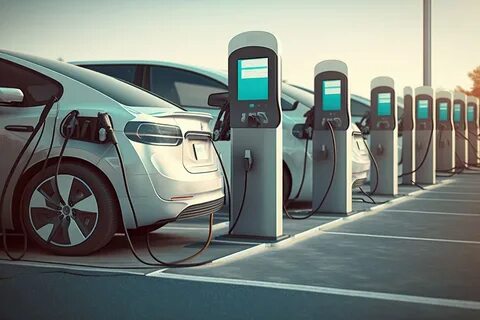
Public charging networks, while expanding rapidly, suffer from their own set of accessibility flaws. Studies reveal that up to 18% of public chargers are non-functional or out of service at any given time, creating frustration for users who arrive at a location only to find unusable equipment. Additionally, charging stations are often unevenly distributed—concentrated in urban centers while rural and suburban areas remain underserved. During peak travel times, such as holidays, long queues at highway charging stations have become a notorious issue, with wait times exceeding 2-3 hours in some cases. This “charging queue anxiety” has become a major deterrent for potential EV buyers.
2. Safety and Reliability Concerns
Safety is non-negotiable in EV charging, yet substandard products and improper usage pose significant risks. The market is flooded with low-quality charging cables and uncertified chargers that lack essential safety features, increasing the likelihood of electrical faults, overheating, and even fire hazards. Many users unknowingly purchase cheap, uncertified charging accessories to save money, putting their vehicles and property at risk.
Environmental durability is another critical reliability issue. Most charging equipment is exposed to the elements—extreme temperatures, rain, snow, dust, and UV radiation. Inferior products quickly degrade under these conditions, leading to shortened lifespans, performance deterioration, and safety risks. For instance, standard charging cables may become brittle in freezing temperatures or degrade under prolonged sunlight exposure, compromising their integrity.
Furthermore, compatibility issues between chargers and different EV models create unnecessary complexity. With multiple global standards (Type 1, Type 2, CCS, GB/T, NACS) in use, users often struggle to find chargers that work seamlessly with their vehicles, leading to wasted time and frustration.
3. Efficiency and Performance Limitations
Charging speed remains a top user complaint. While modern EVs support faster charging, many available chargers—especially older public units and basic home chargers—deliver insufficient power, resulting in excessively long charging cycles. A typical 7kW home charger may take 8-10 hours to fully charge an electric vehicle, while public fast chargers often fail to deliver their advertised speeds due to grid limitations or poor maintenance.
Energy efficiency is also a growing concern. As electricity costs rise globally, inefficient charging equipment leads to higher energy bills and unnecessary power waste. Low-quality chargers suffer from energy conversion losses, generating excess heat and consuming more electricity than necessary to charge a vehicle.
4. Durability and Longevity Challenges
EV charging equipment represents a significant investment, so users expect long-term reliability. However, many products on the market suffer from poor build quality, with components that wear out quickly under frequent use. Charging connectors, in particular, endure constant plugging and unplugging—low-quality connectors lose their tightness over time, leading to poor contact, reduced charging efficiency, and potential safety hazardsczfisher.com.
Outdoor charging equipment faces additional durability challenges. Without proper waterproofing and corrosion resistance, units quickly deteriorate in harsh weather conditions. Maintenance costs for faulty equipment further erode the return on investment for both individual users and commercial charging operators.
2026 and Beyond: Key Trends Shaping the EV Charging Industry
To effectively address these pain points, it is essential to understand the emerging trends that are reshaping the EV charging landscape. Industry experts identify several pivotal developments that will define the sector in 2026 and beyond:
1. Ultra-Fast and High-Power Charging Dominance
The industry is rapidly moving toward ultra-fast charging solutions with power outputs exceeding 150kW, and even 350kW+ systems becoming increasingly common. These advanced chargers can deliver an 80% charge in just 15-20 minutes for compatible vehicles, effectively eliminating “range anxiety”. The widespread adoption of 800V high-voltage platform EVs is accelerating this transition, requiring charging infrastructure to keep pace with higher power delivery capabilities. By 2026, 600kW liquid-cooled ultra-fast chargers will be widely deployed at key locations like highways and commercial centers, achieving “5 minutes of charging for 500km of range”—a game-changing development.
2. Smart, Connected, and AI-Integrated Charging
Intelligence is becoming a standard feature in modern charging equipment. AI-powered energy management systems optimize charging schedules based on grid demand, electricity prices, and user preferences, reducing peak grid load by 20-25% and cutting energy costs. Over 80% of new chargers will feature 5G, IoT connectivity, and remote diagnostic capabilities, enabling predictive maintenance and real-time status monitoring.
The ISO 15118 “Plug and Charge” standard is gaining traction, eliminating the need for cards or apps—users simply plug in, and the charger automatically authenticates and bills the vehicle. Load balancing technology is also becoming essential, especially in commercial and multi-unit residential settings, allowing multiple chargers to operate simultaneously without overloading the electrical system.
3. Bidirectional (V2G) Charging and Energy Ecosystem Integration
Vehicle-to-Grid (V2G) technology is transitioning from pilot projects to mainstream adoption. By 2026, approximately 18% of new commercial chargers will support V2G functionality, allowing EVs to act as mobile energy storage units. During peak demand, these vehicles can feed electricity back to the grid, earning revenue for owners while supporting grid stability. This technology is also enabling Vehicle-to-Home (V2H) applications, where EV batteries power homes during outages or high-cost peak periods.
Integration with renewable energy—particularly solar photovoltaic systems—is creating “solar-storage-charging” integrated solutions that reduce reliance on the grid and lower carbon footprints. These systems maximize the use of clean energy and provide greater energy independence.
4. Stricter Safety and Quality Standards
Regulatory bodies worldwide are implementing stricter certification requirements to ensure charging equipment safety and quality. In China, the mandatory 3C certification for charging equipment will take full effect in 2026, prohibiting the production and sale of uncertified products. Concurrently, new energy efficiency standards (GB46519-2025) will raise the minimum efficiency bar to 96.5%, eliminating low-efficiency products from the market.
Internationally, certifications such as CE, TUV, ETL, and UKCA are becoming prerequisites for market access, ensuring products meet rigorous safety, performance, and environmental standards. Cybersecurity is also gaining attention, with chargers incorporating hardware-level encryption and security modules to protect against hacking and data breaches.
5. Modular, Compact, and Scalable Designs
Manufacturers are shifting toward modular charger architectures that reduce installation time by 30% and maintenance costs by 25%. These designs allow for easy component replacement and upgrades, extending equipment lifespan and adaptability. The use of advanced materials like silicon carbide (SiC) semiconductors reduces charger size by 30% while improving efficiency to over 96%.
Portable charging solutions are also evolving, offering higher power outputs (up to 32A) in more compact, durable designs. These portable units provide unprecedented flexibility for users without home charging access or those needing emergency charging capabilities.
Fisher Electronics: Engineering Solutions for Every EV Charging Challenge
Established in 2007 in Changzhou, China—a hub of advanced manufacturing—Fisher Electronics Technology Co., Ltd. has grown into a globally recognized specialist in EV charging solutionsczfisher.com. For over 16 years, we have combined rigorous R&D, precision manufacturing, and a customer-centric approach to develop charging products that directly address the industry’s most pressing pain points. Our comprehensive product portfolio, including Mode 2 portable chargers, Mode 3 home wallboxes, charging cables, and connectors, is trusted by clients across Europe, North America, Asia, and beyondczfisher.com.
Addressing Installation & Accessibility Challenges
Fisher’s product lineup is engineered for maximum accessibility and ease of installation:
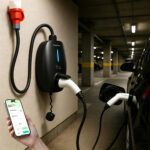
- Plug-and-Play Portable Chargers: Our flagship 16A and 32A Mode 2 portable chargers eliminate installation barriers entirelyczfisher.com. Compact and lightweight, these units work with standard household outlets (110V-240V), providing immediate charging capability anywhere—ideal for users unable to install fixed home chargers.

- Simplified Wallbox Installation: Our 7kW Mode 3 home wallboxes feature a compact, lightweight design with integrated cable management, reducing installation complexity and time. The units support both wall and pole mounting, offering flexibility for various installation scenarios.
- Universal Compatibility: All Fisher chargers support major global standards (Type 2, GB/T, CCS, NACS), ensuring seamless compatibility with nearly all EV and PHEV models on the market.


Engineering Uncompromising Safety & Reliability
Safety is the cornerstone of every Fisher product:
- Multi-Layered Protection Systems: Our chargers incorporate comprehensive safety features including over-voltage, under-voltage, over-current, short-circuit, leakage, and over-temperature protection. Real-time monitoring systems continuously detect and mitigate potential hazards.
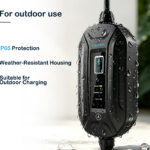
- IP65 Weather Resistance: Every outdoor-rated Fisher product boasts an IP65 waterproof and dustproof rating, ensuring reliable operation in rain, snow, dust, and extreme temperatures (-30°C to +50°C). Our patented waterproof sealing technology—recognized with a national utility patent—provides exceptional protection for critical components.
- Certified Quality Assurance: All Fisher products undergo rigorous testing and hold international certifications including CE, TUV, ETL, UKCA, and ISO 9001/14001/16949. Each unit passes 100% quality inspection before shipment, guaranteeing compliance with the strictest global safety standards.

Delivering Superior Efficiency & Performance
Fisher’s advanced technologies maximize charging speed and energy efficiency:
- High-Power Charging: Our 32A (7kW) chargers deliver significantly faster charging than standard 16A units, cutting charging time in half for most vehicles. For commercial applications, our high-power modules support ultra-fast charging capabilities up to 600kW, ready for the next generation of EVs.
- Industry-Leading Energy Efficiency: Utilizing premium components and advanced circuit design, Fisher chargers achieve energy conversion efficiencies exceeding 96.5%, minimizing energy waste and reducing electricity costs.
- Smart Charging Capabilities: Our intelligent chargers feature built-in microprocessors that optimize charging current based on battery status, grid conditions, and temperature, ensuring efficient, battery-friendly charging.
Built to Last: Durability & Longevity
Fisher products are engineered for exceptional lifespan and resilience:
- Premium Construction: We use high-grade materials including flame-retardant PC/ABS housing, high-purity copper conductors, and durable TPU cable jackets that resist abrasion, oil, chemicals, and extreme temperatures.
- Robust Connectors: Our charging connectors undergo rigorous durability testing, rated for over 10,000 mating cycles while maintaining precise contact and optimal performanceczfisher.com. The ergonomic design ensures easy handling while resisting wear and tearczfisher.com.
- Low Maintenance Design: Fisher chargers feature a robust, modular design with minimal moving parts, reducing maintenance requirements and ensuring long-term reliability. For commercial units, remote diagnostic capabilities enable proactive maintenance and minimize downtime.


Fisher’s Flagship EV Charging Solutions: Tailored for Diverse Needs
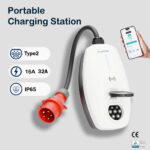
1. Fisher Mode 2 Portable EV Charger (16A/32A)
The ultimate solution for users seeking flexibility and convenience:
- Universal Compatibility: Works with all Type 2/GB/T EVs and PHEVs
- Power Options: 16A (3.7kW) and 32A (7kW) models for flexible charging speedsczfisher.com
- Compact & Lightweight: Easy to store in vehicle trunk for on-the-go chargingczfisher.com
- Full Safety Protection: Comprehensive protection suite with IP65 rating
- User-Friendly: LED indicator lights show charging status clearlyczfisher.com
- Certifications: CE, TUV, UKCA certified for global markets
2. Fisher Mode 3 Home Wallbox Charger (7kW)
Ideal for residential and light commercial use:
- High-Speed Charging: 32A/7kW output for rapid home charging
- Durable Design: IP65 weatherproof for indoor/outdoor installation
- Easy Installation: Compact footprint with multiple mounting options
- Safe & Reliable: Full protection system with certified components
- Customizable: Optional cable length (5m standard, customizable) and branding options
- Quiet Operation: Efficient, silent cooling systemczfisher.com
3. Fisher EV Charging Cables & Connectors
Premium accessories for maximum performance and durability:
- Single- and Double-Head Options: Type 2, GB/T, CCS configurationsczfisher.com
- High-Current Capacity: Supports up to 32A/7kW chargingczfisher.com
- Superior Flexibility: TPU cables remain flexible even in -30°C temperatures
- Ergonomic Design: Comfortable grip with secure locking mechanismczfisher.com
- Long Lifespan: Rated for 10,000+ insertion cyclesczfisher.com


Why Choose Fisher Electronics?
In a crowded market of EV charging manufacturers, Fisher Electronics stands apart through our unwavering commitment to quality, innovation, and customer success:
1. Decades of Specialized Expertise
With 16+ years focused exclusively on EV charging technology, we possess deep industry knowledge and technical proficiency that few competitors can match. Our experienced R&D team continuously innovates to stay ahead of industry trends and evolving customer needs.
2. Uncompromising Quality Control
Our vertically integrated manufacturing process—from design and component sourcing to production and testing—ensures complete quality control at every stage. Every product undergoes rigorous reliability testing including temperature cycling, vibration, waterproofing, and electrical safety tests.
3. Global Compliance & Certifications
Fisher products meet the most stringent international standards, holding all necessary certifications for seamless market access across Europe, North America, Asia, and beyond. Our compliance team stays current with evolving regulations to ensure our products always meet the latest requirements.
4. Flexible OEM/ODM Capabilities
We offer comprehensive OEM and ODM services to meet diverse client needs. From custom branding and packaging to tailored technical specifications, we partner with businesses worldwide to deliver private-label charging solutions. Our low minimum order quantities and flexible production scheduling accommodate both small and large orders.
5. Exceptional Customer Support
From initial product consultation to after-sales service, our dedicated global support team provides comprehensive assistance. We offer detailed technical documentation, installation guidance, and responsive troubleshooting to ensure a seamless experience for our partners and end-users.
Looking Ahead: The Future of EV Charging with Fisher
As the EV industry continues its exponential growth, Fisher Electronics remains committed to leading the charge in innovative charging solutions. Our R&D roadmap focuses on several key areas:
- Next-Generation Ultra-Fast Chargers: Developing liquid-cooled 600kW+ chargers to support 800V EV platforms
- Advanced V2G Solutions: Expanding our bidirectional charging technology for residential and commercial applications
- AI-Powered Smart Charging: Integrating more sophisticated AI algorithms for optimized energy management
- Enhanced Wireless Connectivity: Developing chargers with seamless integration with smart home systems and renewable energy setups
- Sustainable Manufacturing: Increasing our use of recycled materials and implementing greener production processes to reduce our environmental footprint
Conclusion: Powering a Sustainable Future with Confidence
The electric vehicle revolution is here to stay, but its full potential can only be realized with a charging infrastructure that is safe, reliable, efficient, and accessible. At Fisher Electronics, we are proud to be at the forefront of developing solutions that address the EV industry’s most pressing challenges. Whether you are an individual EV owner seeking a dependable home charging solution, a business looking to deploy charging stations for customers or employees, or a retailer searching for high-quality charging products to offer your clients, Fisher has the expertise, products, and commitment to support your journey.
Don’t let charging challenges hinder your transition to electric mobility. Explore Fisher’s comprehensive range of EV charging solutions today and experience the difference that 16 years of engineering excellence and industry leadership can make.
Contact Fisher Electronics today to discuss your EV charging needs and discover how our innovative, reliable, and safe charging solutions can power your electric future.